The Banal Sublime of Robert Adams
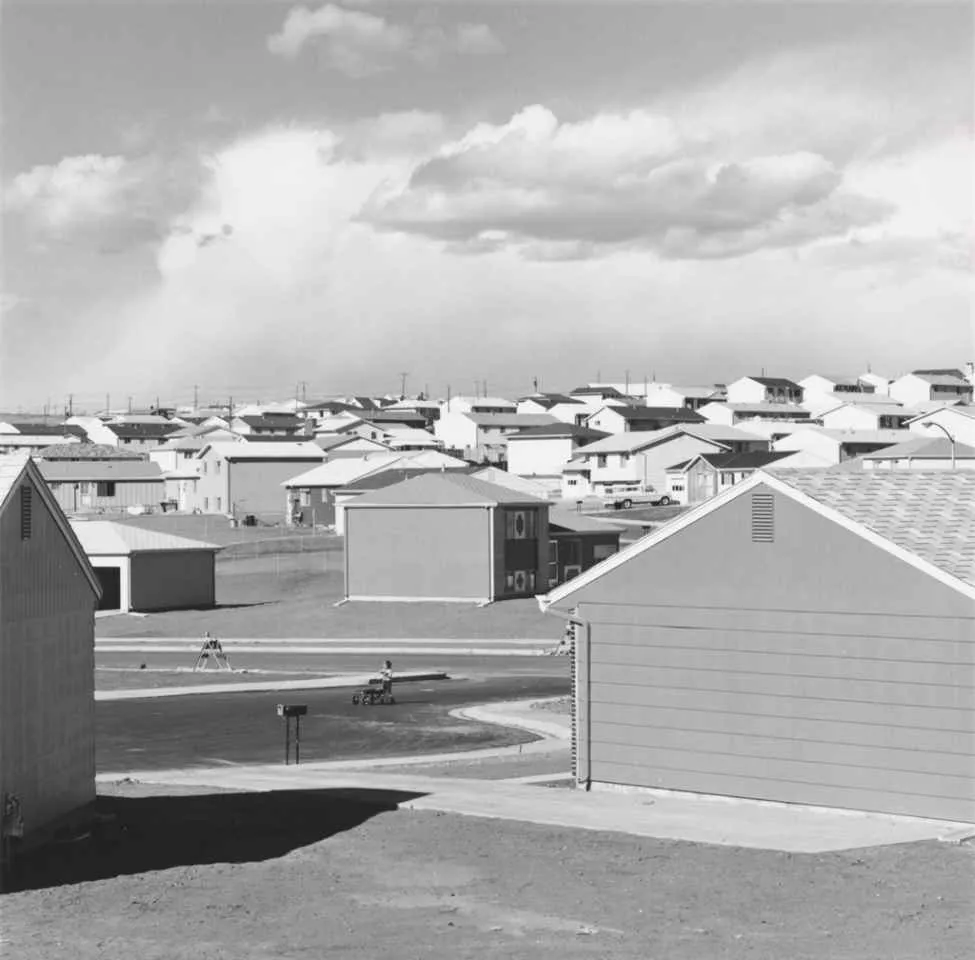
Figure 0: Robert Adams. Colorado Springs. 1968, gelatin silver print, 14.8 x 15.1 cm
1. Introduction
What is stronger, pleasure or pain? Edmund Burke (1729-1797) would argue the latter, claiming that emotions like sorrow and terror are both more intense and longer lasting. This argument is the foundation for his 1757 treatise A Philosophical Enquiry into the Sublime and Beautiful, in which Beauty is equated with pleasure and the Sublime with pain - a pain that is pleasurable when kept at a distance.
The Sublime is associated mostly with 19th century Romantic landscape painters and their preoccupations with all things shapeless, colossal, and otherwise overwhelming (Eco 2004). In the 20th century, painters expanded the Sublime aesthetic into non-pictorial abstraction, and photographers began to apply it to the landscapes of the Anthropocene In 1975 a seminal photography exhibition titled New Topographics revived critical interest in the Sublime landscape, turning away from the splendors of nature to the awestriking blandness of industrial America; the Romantic subjects of oceans, mountains and clouds replaced with car parks, supermarkets and housing estates.
Of the eight photographers in New Topographics, Robert Adams (b.1937) has been the most influential, exhibiting his photographs primarily through the medium of books. His 1974 book The New West consists of 56 images taken along the Rocky Mountains of Colorado, where majestic landscapes are spoiled by the presence of urban sprawl. Deflating the great cowboy myth by showing the anti-climax of environmental conquest, Adams’ photographs are banal in setting, yet sublime in the feelings they evoke.
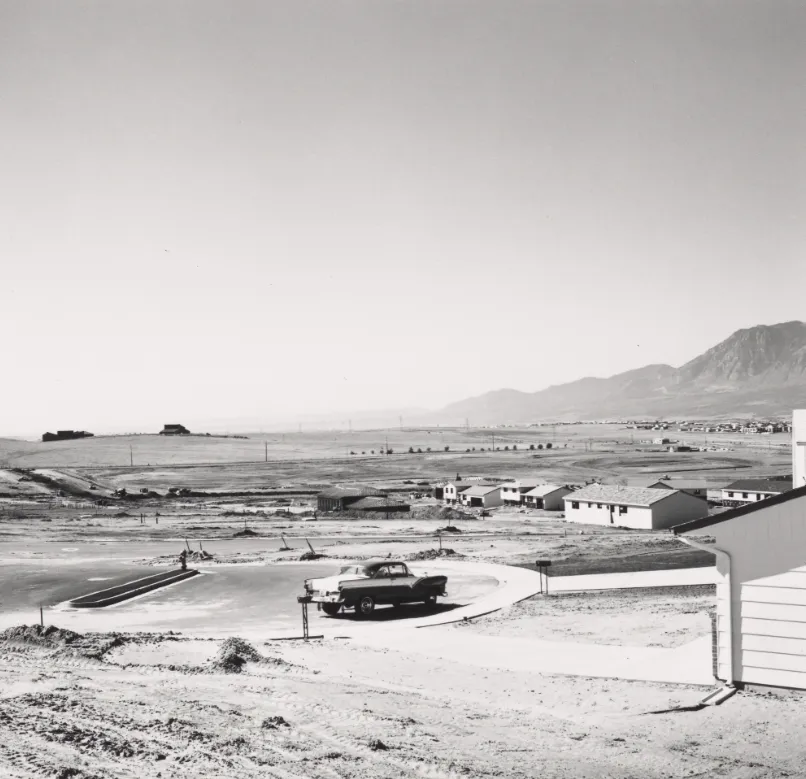
Figure 1: Robert Adams. Newly Occupied Tract Houses. 1968, gelatin silver print, 14.6 x 15.2 cm.
2. Sublime Light
While the New West photographs are best viewed together in their intended sequence, this essay will focus on one image from the book titled Newly Occupied Tract Houses [Figure 1]. The first quality one notices is the extremity of light; the relentless searing brightness for which there is no shelter. For Edmund Burke, “mere light is too common a thing to make an impression on the mind, and without a strong impression nothing can be sublime” (1757, II, XIV). Just as extreme darkness fills one with fear, the merciless shadelessness endemic to new housing estates fills one with discomfort, or quite possibly despair. The brightness of the photo is not just a technical choice, but characteristic to the Colorado landscape itself, which Adams describes as “overspread with light of such richness that banality is impossible” (1974, xii). Like a Romantic painting of a shipwreck, Adams aims to not to merely point at what is terrible, but to charge it with grace.
3. The Artificial Infinite
The next quality one notices is the vastness of the land, and how the roads and houses sprawl endlessly across it. Burke claims that when an object is too great for the mind to contain, one is struck with a sense of sublime terror, but in order for this to happen, the object must “make some sort of approach towards infinity” (1757, ii. xiv). What Burke refers to as the ‘artificial infinite’ is constituted by three qualities: succession, uniformity and boundlessness.
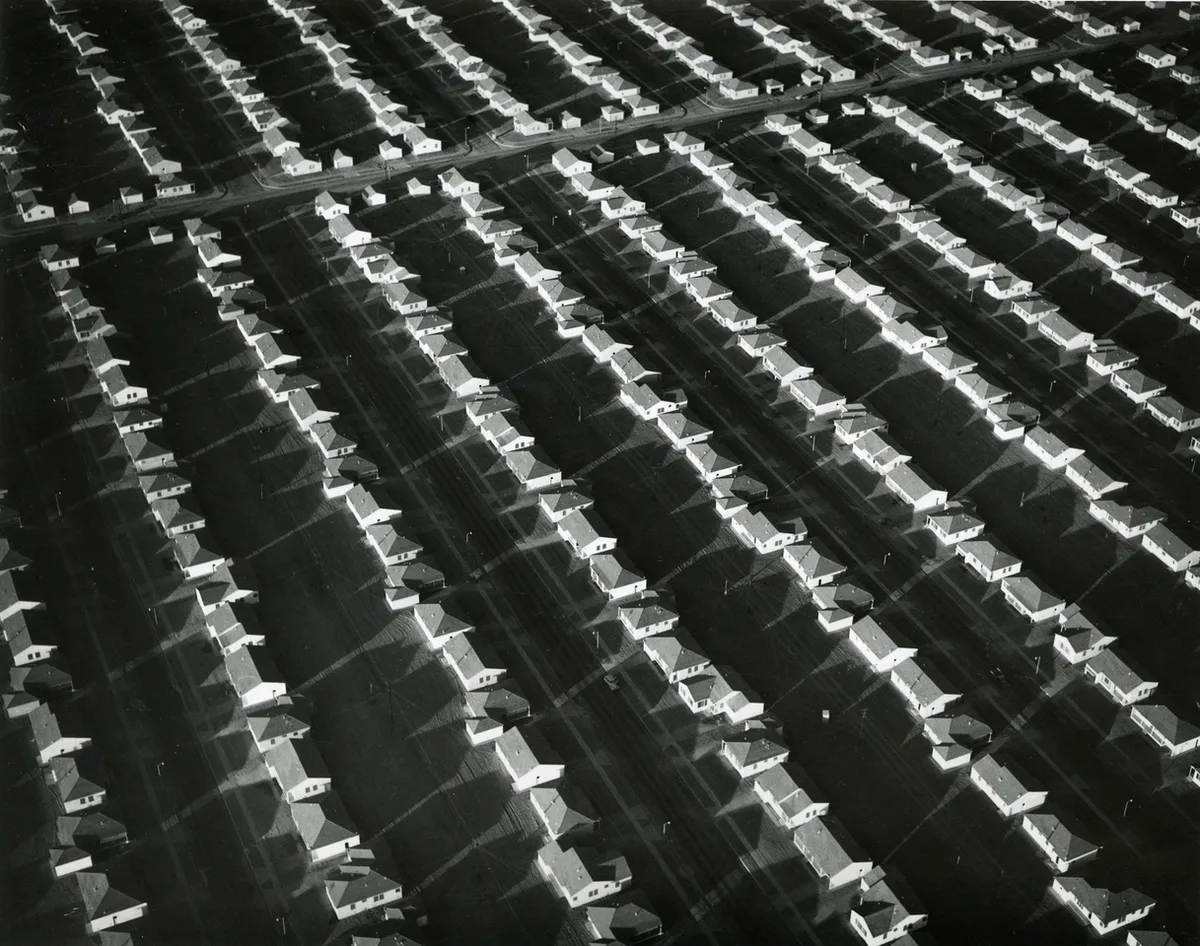
Figure 2: William Garnett. Lakewood, CA, Housing Complete and Streets Ready for Paving. 1950, gelatin silver print, 8 x 10 inches.
Artistic representations of American suburbia, such as William Garnett’s infamous aerial photographs of Lakewood California [Figure 2], often accentuate these qualities to evoke both the terror of infinity, and to play into Western fears of conformity. The suburbs in Adams’ Colorado Springs are less monotonous than Garnett’s, and as a result, slightly less frightening. One could attribute this to changes in urban planning between 1950-68, or artistic generousity on Adams’ part. Still, one feels a sense of dread as the tract houses dwindle sadly into the distance.
4. Western Awe
The vastness of the desert alongside the enormous mountains brings to mind two contradictory feelings. One is the perfunctory sense of awe we have of the Wild West landscape - a feeling tied to both its scale and also the mythologised difficulty of its conquest - a story retold and reframed through centuries of cowboy narratives. Depending on one's stance on colonisation, one may react to the West's taming in either wonder or horror. Yet the second feeling one gets from the photo, no matter where one sits politically, is disappointment at the tragic mediocrity of what man has wrought; at the cheap, thoughtless infrastructure that litters the landscape. Adams writes elegiacally that “few of the new houses will stand in fifty years; linoleum buckles on counter tops, and unseasoned lumber twists walls out of plumb before the first occupants arrive” (1974, 23). One looks West and finds wreckage.
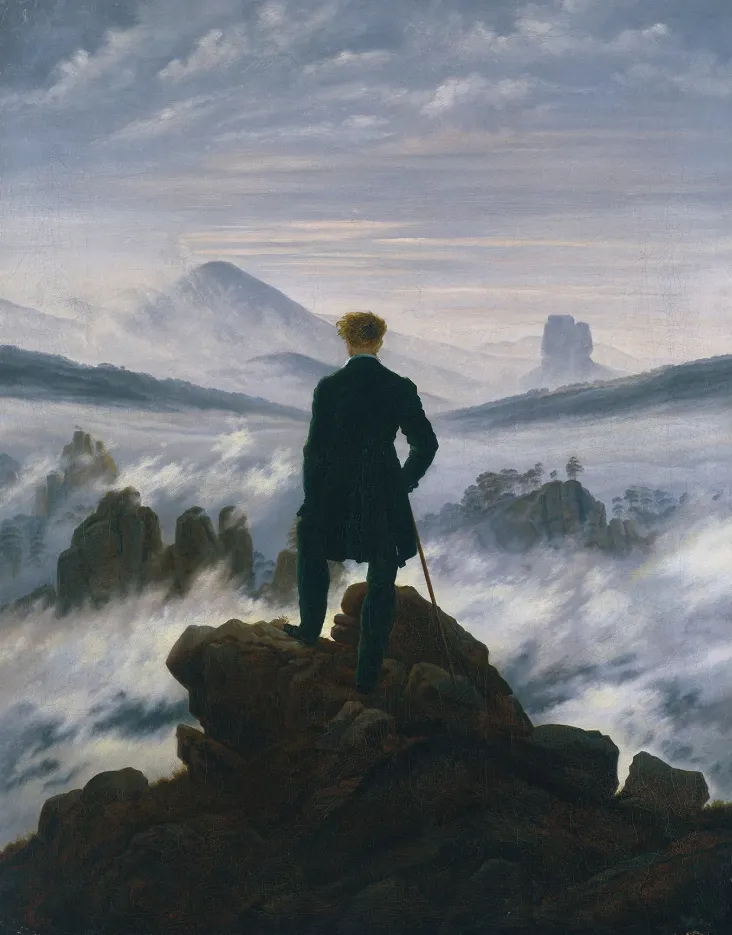
Figure 3: Caspar David Friedrich. Wanderer Above the Sea of Fog. 1818, oil painting, 94.8 x 74.8 cm.
5. The Rückenfugur
The critique of conquest pits Adams against the ideals of the Romantics. One can read the photograph as a pessimistic restaging of Caspar David Friedrich’s Wanderer Above the Sea of Fog [Figure 3] where Friedrich’s lone wanderer is replaced by the 20th century’s new protagonist: the car, which looks out from its cul-de-sac to a scenic view blocked by houses. The back-facing figure, known as a Rückenfugur, is a common motif in Romantic landscapes, employed both to establish scale and engage the viewer in a kind of psychological identification in which the landscape is seen through the figure (Eco 2010). The Rückenfugur reminds one that “sublimity occurs in the mind of the beholder and not in the object that occasions its experience” (Duke 2024). Friedrich places his Rückenfugur front and center on the mountain, his stance heroic, the natural world his dominion. The painting betrays the aggressive optimism heard in William Faulkner's famous speech: “I believe that man will not merely endure: he will prevail” (1950). Adams’ photograph shows that what has prevailed is not man, but the car - an invention that has given rise to a world that can only be accessed through itself, providing man freedom at the cost of nature and community, thus threatening his ability to even endure. It is this melancholy that Robert Adams’ wasteland evokes; the car the only sensible Rückenfugur through which to see it.
6. Beauty and Form
However ugly the subject matter, the photographs in The New West would not hold power if they were not also beautiful. Although Burke states that the Sublime and Beautiful are diametrically opposed, later philosophers such as Nietzsche refute this. Adams, in his own essays, is far more concerned with classical Beauty than he is with the Sublime, believing that Beauty is Truth revealed through Form, and that anything, no matter how banal or unpleasant, can therefore be made beautiful (1989). Adams cites Edward Weston’s dead pelican as an example [Figure 4], being a photograph that is Sublime in its terrible subject matter and Burkian ugliness (eg. dark tones and mucky textures), yet beautiful in composition and movement.
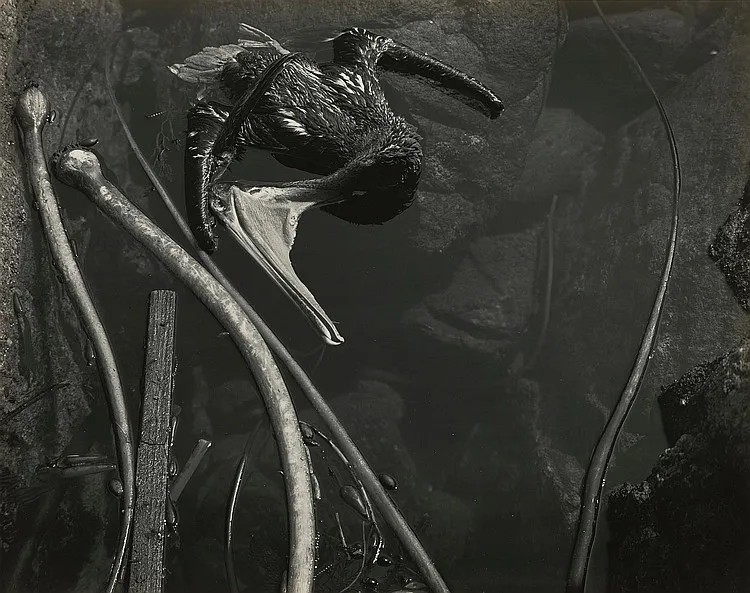
Figure 4: Edward Weston. Tidepool, Point Lobos (Dead Pelican). 1945, gelatin silver print, 19.1 x 24.1 cm.
Adams writing echoes Nietzsche’s fusion of the Dyonysian and Apollonian when he writes that “Form helps us meet our worst fear, the suspicion that life may be chaos and that therefore our suffering is without meaning” (1989, 25). By giving shape to the shapelessness of life, art can make “intelligible to us what we already know” (1989, 16) while renewing our interest in what we have ignored. If beauty is his aim, then why does Adams photograph such ugliness? Adams replies: “Why open our eyes anywhere but in undamaged places like national parks? One reason is, of course, that we do not live in parks, that we need to improve things at home, and that to do it we have to see the facts without blinking” (1975, xi-xii).
7. Conclusion
Since the publication of The New West (1974) and the 1975 New Topographics exhibition, photographers have continued to employ Burke’s theories of the Sublime to “make intelligible” the unfathomable landscapes of capitalism. Writing this essay in Perth which currently holds the record for the world's longest city, the photographs of Robert Adams show a truth that has only grown truer, and this truth is depicted with sublime beauty.
Bibliography
Adams, Robert. 1974. The New West. USA: Steidl Publishers.
Adams, Robert. 1989. Beauty in Photography: Essays in Defence of Traditionalist Values. USA: Aperture.
Burke, Edmond. 1757. A Philosophical Enquiry into the Sublime and Beautiful. London: Penguin.
Duke, Hunter. 2024. “Looking Backward: Images of Rückenfiguren (ca. 1497–1925)”. The Public Domain Review. https://publicdomainreview.org/collection/ruckenfigur/
Eco, Umberto. 2004. On Beauty. London: MacLehrose Press.
Faulkner, William. 1950. “William Faulkner’s speech at the Nobel Banquet at the City Hall in Stockholm, December 10, 1950”. Nobel Prize. https://www.nobelprize.org/prizes/literature/1949/faulkner/speech/NobelPrize.org
Whiting, Cécile. 2013. “The Sublime and the Banal in Postwar Photography of the American West.” American Art 27 (2): 44–67. https://doi.org/10.1086/673109
Note: This essay was written for a university class on the history of beauty. The prompt was "Select one main artwork and argue that it can be considered sublime via the aesthetic principles of Edmund Burke".